Summary:-
A Qualifying Free Zone Person UAE allows eligible Free Zone businesses to enjoy 0% corporate tax on qualifying income under strict compliance rules. Companies must meet conditions like economic substance, income criteria, and proper documentation. Failing to comply leads to a 9% tax and loss of benefits for up to five years.
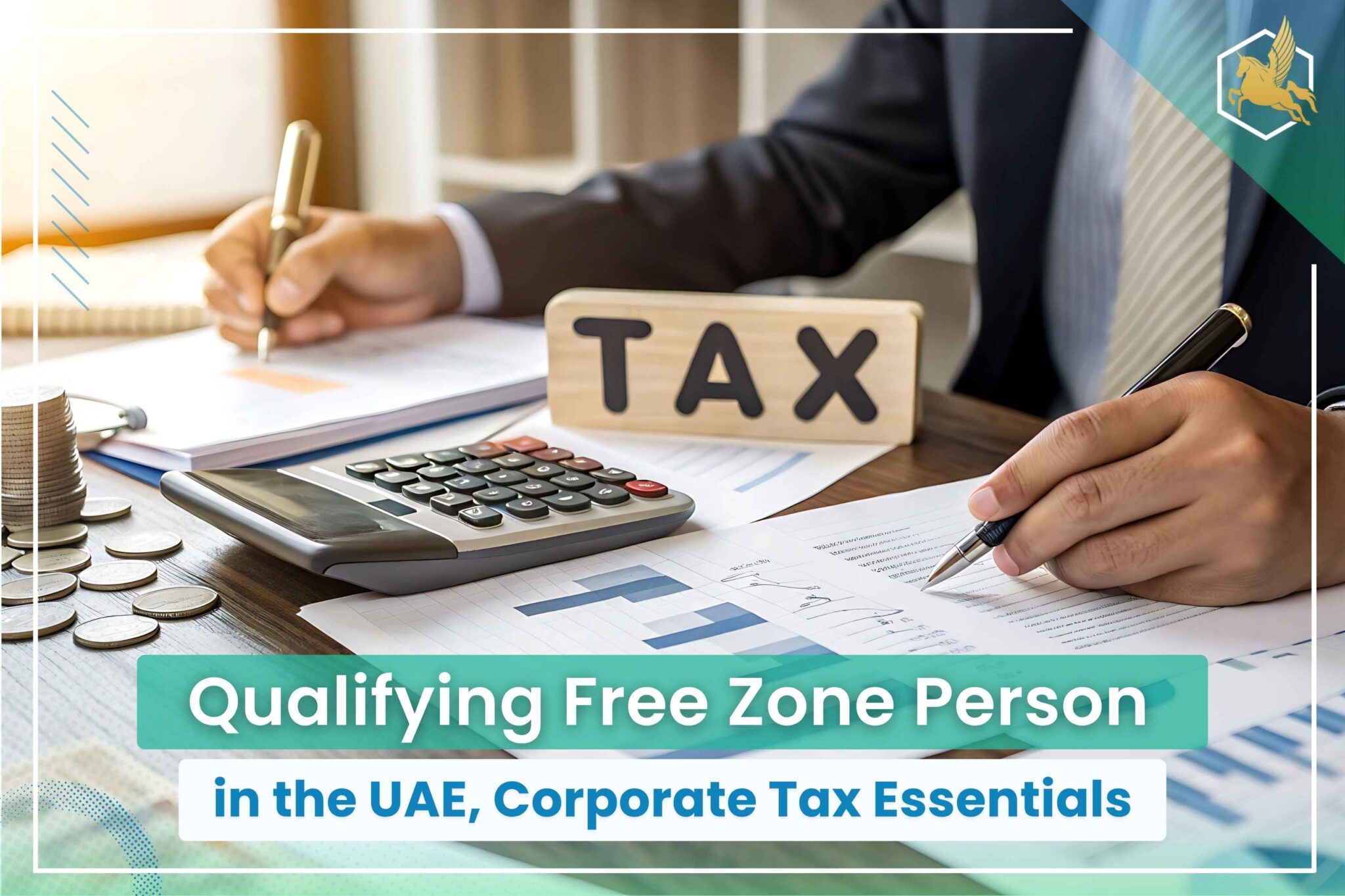
The introduction of corporate tax in the UAE has significantly changed how businesses operate and plan their finances. Since June 2023, companies are subject to 0% tax on profits up to AED 375,000 and 9% beyond that threshold. However, Free Zone businesses can still enjoy a 0% corporate tax benefit if they meet the criteria of a Qualifying Free Zone Person UAE.
This guide by unicorn global solutions l.l.c explains everything you need to know—from eligibility conditions to qualifying income, compliance requirements, and risks of disqualification.
What is a Free Zone in the UAE?
A Free Zone is a designated economic area that offers incentives such as full foreign ownership, simplified setup, and tax advantages. Popular Free Zones include IFZA, RAKEZ, Ajman Free Zone, and DWTC.
Under the new tax regime, businesses in these zones can retain tax benefits only if they qualify under the Qualifying Free Zone Person UAE framework.
Who is a Qualifying Free Zone Person UAE?
A Qualifying Free Zone Person UAE refers to a legal entity registered in a UAE Free Zone that meets specific criteria outlined in the Corporate Tax Law. These businesses can benefit from a 0% corporate tax rate on qualifying income, while non-qualifying income is taxed at 9%.
For example, a UAE Qualifying Free Zone Person must strictly follow all regulatory and operational conditions to maintain eligibility.
Conditions to Become a Qualifying Free Zone Person UAE
To qualify, businesses must meet all the following requirements:
1. Free Zone Registration
The company must be legally incorporated or registered in a recognized UAE Free Zone.
2. Adequate Economic Substance
Businesses must:
- Conduct core activities within the Free Zone
- Maintain sufficient assets and employees
- Incur adequate operating expenses
3. Earn Qualifying Income
Income must come from approved sources such as:
- Transactions with other Free Zone entities
- Approved activities with mainland or foreign businesses
4. No Election for Standard Tax
The company should not opt for the 9% corporate tax regime.
5. Transfer Pricing Compliance
All related-party transactions must follow arm’s length principles.
6. Audited Financial Statements
Financial records must be audited annually as per IFRS standards.
7. De-minimis Rule
Non-qualifying income must not exceed:
- AED 5 million OR
- 5% of total revenue (whichever is lower)
Failure to meet any condition will disqualify the company from being a Qualifying Free Zone Person UAE.
Qualifying vs Non-Qualifying Income
Understanding income classification is critical for maintaining QFZP status.
Qualifying Income Includes:
- Transactions with Free Zone entities
- Manufacturing and processing
- Logistics and shipping services
- Investment and fund management
- Treasury and financing services
Non-Qualifying Income Includes:
- Transactions with individuals
- Banking and insurance (with exceptions)
- Real estate activities outside Free Zones
- Intellectual property income (unless qualified)
Activities Classification Table
Category | Qualifying Activities | Non-Qualifying Activities |
Manufacturing | Production, processing goods | — |
Logistics | Shipping, warehousing, distribution | — |
Financial Services | Treasury to related parties, reinsurance | Banking, insurance (general) |
Real Estate | Commercial property in Free Zones | Property outside Free Zones |
Transactions | Free Zone to Free Zone | Dealings with individuals |
Intellectual Property | Limited qualifying scenarios | General IP income |
Benefits of Qualifying Free Zone Person UAE
Achieving Qualifying Free Zone Person UAE status offers several advantages:
- 0% corporate tax on qualifying income
- Enhanced global competitiveness
- Better financial efficiency
- Increased investor confidence
What Happens If You Lose QFZP Status?
Failure to meet the criteria results in:
- 9% tax on total taxable income
- Loss of 0% benefit for 5 years (current + next 4 years)
- Increased compliance scrutiny
This makes it crucial to consistently meet all requirements of a Qualifying Free Zone Person UAE.
How unicorn global solutions l.l.c Can Help
Corporate Tax Registration
- Register via EmaraTax portal
- Obtain a Tax Registration Number (TRN)
Filing Obligations
- Submit annual tax returns within 9 months
- Maintain audited financials
- Provide income segregation details
- Maintain records for at least 7 years
Even a Dubai Qualifying Free Zone Person must comply with these obligations regardless of tax liability.
At unicorn global solutions l.l.c, we assist businesses with:
- Eligibility assessment for QFZP status
- Corporate tax registration and filing
- Transfer pricing documentation
- Compliance monitoring and reporting
- Risk management and advisory
Our experts ensure your business remains compliant while maximizing tax benefits.
Conclusion
Becoming a Qualifying Free Zone Person UAE is a valuable opportunity for businesses to retain tax efficiency under the new corporate tax regime. However, strict compliance, proper planning, and regular monitoring are essential to maintain this status.
Partnering with experts like unicorn global solutions l.l.c ensures your business stays compliant, avoids penalties, and continues to benefit from the UAE’s favorable tax environment.
Unicorn Global Solutions L.L.C is here to help! Text us on whatsApp or call us today .
Frequently Asked Questions (FAQs)
No, only companies meeting all conditions qualify as a Qualifying Free Zone Person UAE.
Yes, all Free Zone businesses must register for corporate tax.
Yes, non-compliance results in disqualification and taxation at 9%.
By meeting substance requirements, filing returns, and adhering to transfer pricing rules.
NOTE:
The above note is subject to further study and clarification. It does not constitute a formal opinion from our end. Before making any decisions based on the above, we recommend consulting our experts on the subject.