
Closing a business in Dubai involves more than canceling a trade license. One of the most important legal requirements is preparing a Liquidation Report for Businesses in Dubai, a formal document that confirms a company’s financial affairs have been reviewed, liabilities addressed, and assets accounted for before deregistration. Whether a business is operating on the mainland or in a free zone, understanding the liquidation process helps avoid penalties, delays, and future legal complications.
What Is a Liquidation Report for a Company in Dubai?
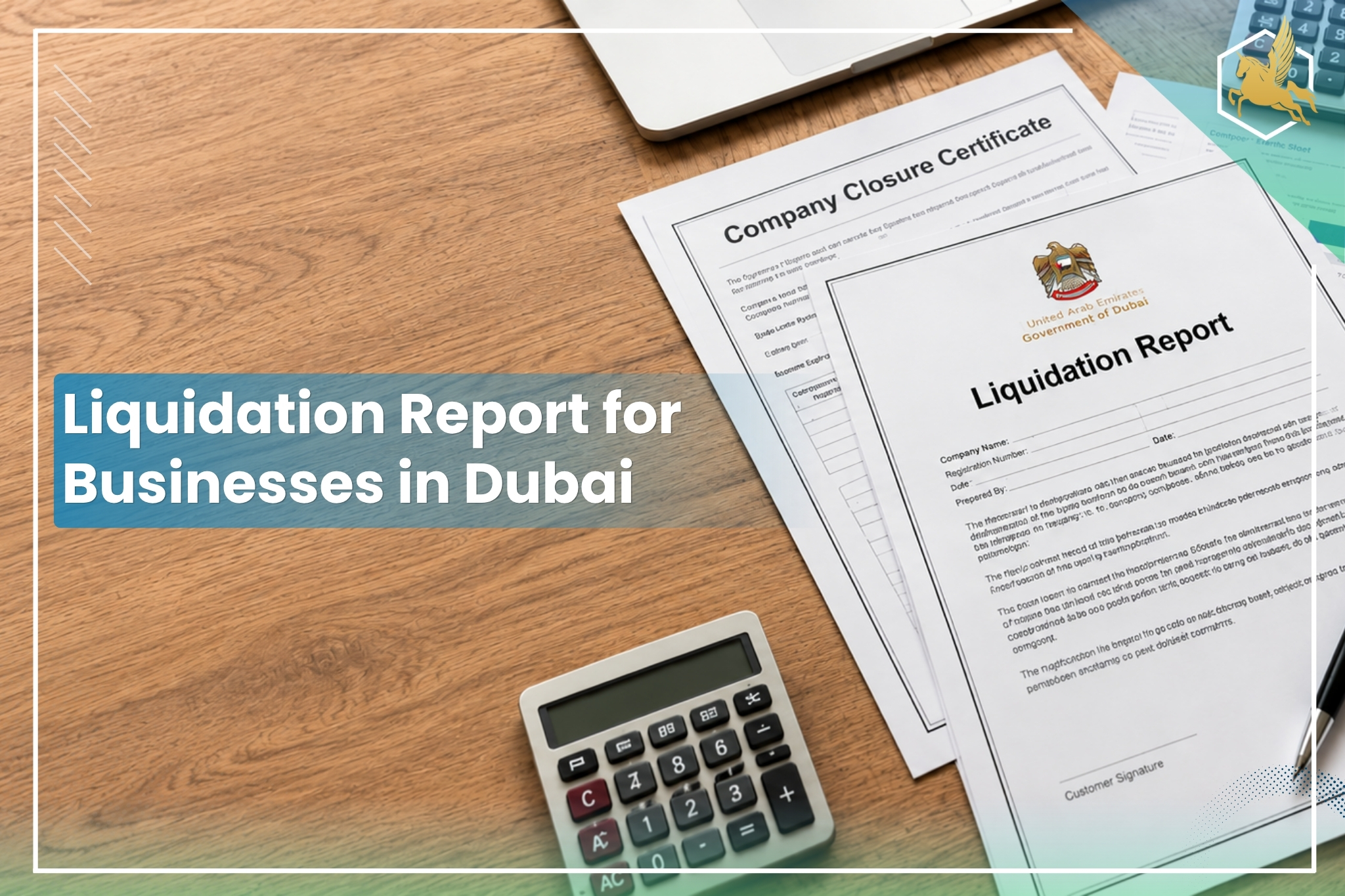
A liquidation report is an official document prepared during the legal closure of a company, confirming that the company’s financial position has been reviewed before deregistration. The report records the settlement of liabilities, treatment of assets, and completion of financial obligations. For example, a trading company closing after completing all supplier payments would require this report before authorities approve license cancellation.
A Company Liquidation Report generally includes:
- Details of the company and trade license
- Financial statement review
- List of assets and liabilities
- Confirmation of debt settlement
- Distribution of remaining assets, if applicable
- Statement confirming completion of liquidation procedures
- Liquidator’s declaration and signature
The report provides regulators with evidence that the business has complied with applicable legal and financial requirements before closure.
Why Is a Liquidation Report Required When Closing a Business in Dubai?
A liquidation report is required because Dubai authorities must verify that a company has fulfilled its financial and legal responsibilities before removing it from official records. The report protects creditors, shareholders, employees, and government agencies by documenting that obligations have been resolved. For example, a company with unpaid employee dues cannot usually complete liquidation until those obligations are addressed.
Without a properly prepared report, authorities may refuse to cancel the company’s trade license, leaving renewal fees, administrative penalties, or compliance obligations active. The report also creates an official record that helps prevent future disputes regarding company debts or ownership.
Who Prepares the Liquidation Report for a Company?
A licensed liquidator prepares the liquidation report after examining the company’s financial records and verifying that legal requirements have been met. The appointment is usually approved according to the company’s governing authority and applicable regulations. For example, shareholders typically pass a resolution appointing a qualified professional before liquidation begins.
The resulting Liquidator Report reflects an independent review rather than a document prepared by company management alone. This independent assessment strengthens the credibility of the closure process and satisfies regulatory requirements.
What Information Is Included in a Company Liquidation Report?
A liquidation report documents the financial status of the company at the time of closure and explains how assets, liabilities, and remaining obligations were handled. A complete report enables authorities to evaluate whether the business can legally cease operations. For example, inventory sold during liquidation should be reflected together with proceeds used to settle liabilities.
Typical information includes:
Company Identification
- Company name
- Trade license number
- Legal structure
- Registered office
Financial Position
- Assets owned
- Outstanding liabilities
- Bank account status
- Outstanding receivables
Compliance Review
- Employee settlement confirmation
- Tax and regulatory obligations, where applicable
- Shareholder resolutions
- Creditor settlement records
Final Declaration
- Confirmation that liquidation procedures have been completed
- Signature and certification by the appointed liquidator
What Is the Role of a Liquidator in the Company Liquidation Process?
A liquidator oversees the legal and financial closure of the company while protecting the interests of creditors, shareholders, employees, and regulatory authorities. The liquidator acts independently throughout the process. For example, the liquidator verifies company records before confirming that liabilities have been settled.
The responsibilities commonly include:
- Reviewing financial statements
- Identifying company assets
- Settling outstanding liabilities
- Coordinating with creditors
- Preparing statutory reports
- Filing required documents with licensing authorities
- Recommending final deregistration
The liquidator also ensures that required legal notices and procedural deadlines are followed before company closure.
What Are the Steps Involved in Liquidating a Company in Dubai?
Company liquidation follows a structured legal process designed to ensure proper financial settlement before deregistration. The exact sequence varies between mainland authorities and individual free zones, but the core stages remain similar. For example, a consultancy firm and a trading company generally complete many of the same procedural requirements.
Step 1: Shareholder Resolution
Owners formally approve company liquidation and appoint a licensed liquidator.
Step 2: Liquidator Appointment
The appointed professional begins reviewing financial records and compliance documents.
Step 3: Public Notice
Certain jurisdictions require publication of a creditor notice, often allowing approximately 45 days for claims.
Step 4: Debt Settlement
Outstanding supplier payments, employee benefits, loans, and contractual obligations are resolved.
Step 5: Government Clearances
Approvals are obtained from relevant authorities, which may include immigration, labor, customs, landlords, utilities, and licensing authorities where applicable.
Step 6: Final Report Submission
The liquidator submits the completed report together with supporting documentation.
Step 7: Trade License Cancellation
The authority approves deregistration after reviewing the submitted documents.
Many businesses engage Dubai Liquidation Services to coordinate documentation, authority submissions, and regulatory communication throughout these stages.
How Long Does the Company Liquidation Process Take in Dubai?
Most company liquidations in Dubai are completed within 30 to 90 days, although more complex businesses may require additional time. The overall timeline depends on outstanding liabilities, regulatory approvals, shareholder documentation, and creditor claims. For example, a company with no employees and minimal liabilities often completes the process faster than a business with multiple contracts and leased premises.
Delays commonly arise from missing financial records, unresolved debts, pending visa cancellations, or incomplete government clearances. Preparing documents before starting the process can significantly reduce processing time.
What Documents Are Required to Prepare a Liquidation Report?
Preparing a liquidation report requires financial, legal, and corporate records that accurately reflect the company’s position before closure. Complete documentation allows the liquidator to verify compliance efficiently. For example, missing bank statements frequently delay completion because asset balances cannot be confirmed.
Commonly required documents include:
- Trade license copy
- Certificate of incorporation
- Memorandum and Articles of Association
- Shareholder resolution
- Passport and Emirates ID copies of shareholders
- Audited or available financial statements
- Bank closure confirmation
- Lease termination documents
- Employee settlement records
- Visa cancellation confirmations where applicable
- Clearance certificates from relevant authorities
What Happens After Submitting the Liquidation Report to Authorities?
After submission, the licensing authority reviews the liquidation report together with supporting documents before approving company closure. Authorities verify that statutory obligations have been completed and required approvals have been obtained. For example, authorities may request clarification if financial records do not align with submitted clearance certificates.
Once the review is successfully completed, the authority issues the company deregistration or trade license cancellation approval. The company then legally ceases business operations, subject to completion of all applicable regulatory requirements.
Is a Liquidation Report Mandatory for All Companies in Dubai?
Most companies undergoing formal closure in Dubai must complete a liquidation process, although specific requirements vary according to business structure, licensing authority, and jurisdiction. For example, companies with multiple shareholders or regulated activities generally have stricter compliance obligations than certain simplified structures.
Business owners should always confirm the exact requirements applicable to their licensing authority before beginning the closure process. Working with Experts in Liquidation UAE can help identify jurisdiction-specific obligations, reduce documentation errors, and avoid unnecessary delays during deregistration.
Professional Guidance for Business Closure
Seeking professional assistance early allows business owners to understand expected government fees, estimated service charges, documentation requirements, and realistic completion timelines before initiating closure. A properly prepared Liquidation Report for Businesses in Dubai helps ensure that the company exits the market legally, efficiently, and with full regulatory compliance.