Summary:-
UAE extends Small Business Relief until 31 December 2029, giving eligible businesses more time to benefit from Corporate Tax relief. However, businesses must continue to meet Corporate Tax registration, filing, and record-keeping requirements. Businesses near the AED 3 million revenue threshold or operating in Free Zones should verify their eligibility before claiming the relief.
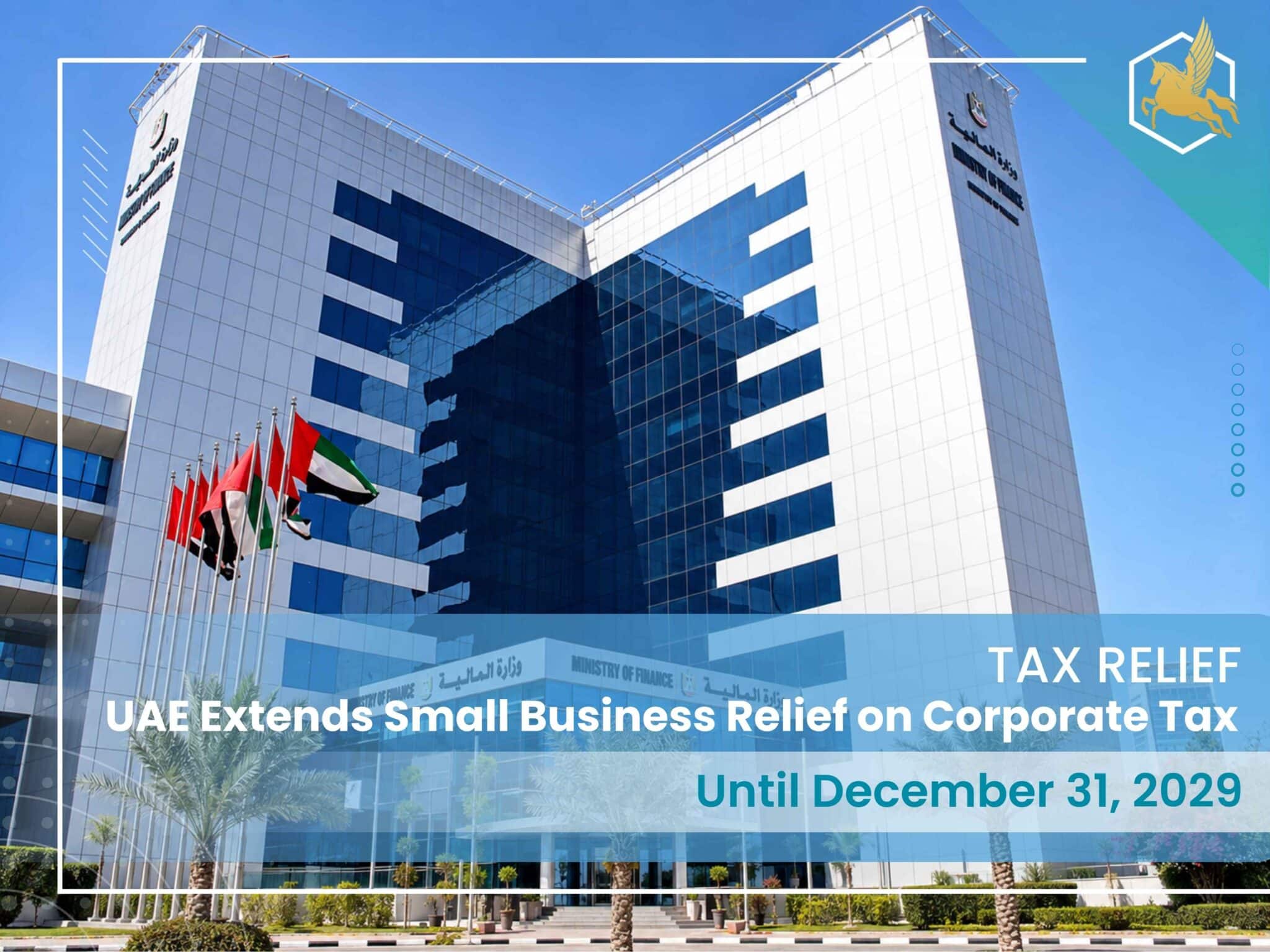
The UAE has extended the availability of Small Business Relief under Corporate Tax until 31 December 2029, giving qualifying small businesses additional time to benefit from the relief. The key point for business owners is that the extension does not remove Corporate Tax registration or filing obligations. Eligible businesses must still register, elect the relief through their Corporate Tax return, file within the prescribed deadline, and maintain supporting records.
From my perspective, this extension is particularly relevant for startups, owner-managed businesses and smaller UAE companies that are still building their revenue base. However, businesses should not treat the relief as an automatic exemption. Eligibility needs to be reviewed for each relevant tax period.
What Is Small Business Relief in the UAE?
Small Business Relief is a Corporate Tax relief designed to reduce the tax and compliance burden for eligible UAE-resident small businesses. Where the conditions are satisfied, an eligible taxable person can elect to be treated as having no taxable income for the relevant tax period.
The important threshold is AED 3 million of revenue. The Federal Tax Authority states that the business must have revenue of AED 3 million or less in the relevant tax period and all previous tax periods covered by the rules.
For example, if a UAE-resident business has revenue of AED 1.8 million during the relevant period and has also remained within the applicable AED 3 million threshold in its previous tax periods, it may be able to elect Small Business Relief, provided all other conditions are met.
It is important to understand the difference between revenue and taxable profit. The AED 3 million test is based on revenue, not simply on how much profit the company makes.
UAE Extends Small Business Relief Until 31 December 2029
The extension gives eligible businesses more time to use the Small Business Relief framework. Previously, the relief was scheduled to apply to qualifying tax periods ending on or before 31 December 2026. The extension moves the end date to 31 December 2029.
This means eligible businesses can potentially continue using the relief for qualifying tax periods through the extended period, subject to the conditions applicable at the time.
The extension is significant because many smaller businesses are still adapting to UAE Corporate Tax compliance. Instead of immediately facing the full administrative burden associated with calculating taxable income, qualifying businesses can continue to use the simplified relief mechanism.
The FTA has also made it clear that receiving the relief does not mean a business can ignore Corporate Tax compliance. In its August 2026 guidance, the FTA confirmed that eligible taxable persons must register for Corporate Tax, submit simplified Corporate Tax returns and maintain relevant records.
Businesses should therefore look at the extension as a tax relief mechanism, rather than as a complete exemption from Corporate Tax administration.
What Has Changed Under the New UAE Small Business Relief Decision?
The main change is the extension of the availability period.
For business owners, the practical impact can be understood as follows:
Area | Position |
Relief availability | Extended through 31 December 2029 |
Revenue threshold | AED 3 million |
Election | Must be made through the Corporate Tax return |
Corporate Tax registration | Still required where applicable |
Tax return filing | Still required |
Record keeping | Still required |
Relief status | Not automatic |
The AED 3 million revenue threshold remains a critical eligibility test under the current FTA framework. A business cannot simply look at its current-year revenue and assume it qualifies. Previous relevant tax periods must also be considered.
The FTA’s latest clarification is particularly important: a business that qualifies for the relief still has to file its Corporate Tax return. The relief simplifies the return, but it does not eliminate the filing requirement.
Who Is Eligible for Small Business Relief in the UAE?
The key eligibility considerations I would review with a business owner are:
1. UAE residency for Corporate Tax purposes
The taxpayer must fall within the relevant UAE resident-person rules.2. Revenue must remain within the threshold
Revenue must be AED 3 million or less for the relevant tax period and applicable previous tax periods. For example, if a company generates AED 2.4 million this year but had AED 3.4 million in a previous relevant tax period, it cannot assume that the current year’s lower revenue automatically makes it eligible.3. The business must satisfy the exclusion rules
Certain taxpayers cannot elect the relief. The FTA specifically identifies Qualifying Free Zone Persons and members of multinational enterprise groups meeting the applicable consolidated revenue threshold among those excluded from the relief. v4. The relief must be elected Being below AED 3 million does not automatically activate the relief. The eligible taxpayer needs to make the election through its Corporate Tax return.How Does the Small Business Relief Extension Affect UAE Businesses?
For small businesses, the extension can provide greater certainty when planning their tax and accounting processes.
The immediate benefit is that an eligible business may continue to reduce its Corporate Tax compliance burden by electing the relief. The FTA explains that businesses benefiting from the relief can use a simplified tax return, reducing the amount of information they need to submit.
The extension may be particularly useful for:
- Newly established businesses that are still developing their customer base
- Small consulting and professional-service firms
- Owner-managed businesses
- Smaller trading companies
- Startups with revenue below the applicable threshold
- Businesses that need additional time to establish mature accounting systems
However, I would advise business owners not to wait until the filing deadline to check eligibility.
The FTA has confirmed that businesses must retain records that allow the Authority to verify revenue, taxable income and eligibility. Core records can include transaction records, asset records, liability records and ownership records.
UAE extends Small Business Relief on corporate tax until 2029
This extension therefore gives qualifying businesses additional time, but it also makes proper record keeping more important. If your business revenue approaches AED 3 million, monitoring revenue monthly rather than only at year-end becomes particularly useful.
Small Business Relief and Free Zone Businesses: What to Know
Free Zone companies need to be particularly careful because not every Free Zone business receives the same Corporate Tax treatment.
A Free Zone company that qualifies as a Qualifying Free Zone Person (QFZP) cannot elect Small Business Relief under the FTA’s current guidance.
This is important because business owners sometimes assume:
“My company is in a Free Zone, so I automatically qualify for Small Business Relief.”
That is not the correct approach.
A Free Zone business should first determine its Corporate Tax status and whether it is seeking treatment under the Free Zone Corporate Tax regime. The business should then assess whether Small Business Relief is legally available to it.
For example, a Free Zone company with AED 1.5 million in revenue should not immediately select Small Business Relief simply because its revenue is below AED 3 million. Its Free Zone tax status and other eligibility conditions must first be reviewed.
This is an area where I recommend businesses obtain professional tax advice rather than relying only on their trade licence location.
What Should UAE Businesses Do Before Claiming Small Business Relief?
1. Check your Corporate Tax registration
Confirm that the business is properly registered for Corporate Tax and has the required tax registration details.2. Review current revenue
Calculate the business’s revenue for the relevant tax period and confirm that it is within the AED 3 million threshold.3. Review previous tax periods
Do not check only the current year’s figures. The previous relevant tax periods also matter when determining eligibility.4. Check whether your business is excluded
Confirm whether the business is a Qualifying Free Zone Person or falls within another category that cannot elect the relief.5. Maintain supporting records
Keep invoices, bank records, accounting records, contracts and other documents that support the revenue figures reported to the FTA.6. Elect the relief correctly
Small Business Relief is elected through the Corporate Tax return. It is not an automatic benefit simply because your revenue is below AED 3 million.7. File within the legal deadline
The FTA has reiterated that eligible businesses must submit their simplified Corporate Tax returns within the prescribed deadline. For example, the FTA recently confirmed that taxpayers with a financial year ending 31 December 2025 must submit their Corporate Tax returns by 30 September 2026. In general, Corporate Tax returns and any tax due are required within nine months from the end of the relevant tax period.8. Consider the commercial impact before electing
Tax relief should not be viewed in isolation. Depending on the company’s circumstances, choosing the relief can affect the treatment of certain tax attributes, so I would review the company’s current and expected financial position before making the election.Key Takeaways on UAE Small Business Relief Extension
The most important points for UAE business owners are:
- UAE Extends Corporate Tax Small Business Relief to 2029, giving qualifying businesses additional time to use the relief.
- The extended end date is 31 December 2029.
- The key revenue threshold is AED 3 million, subject to the applicable rules.
- The relief is generally available to qualifying UAE-resident taxable persons.
- A Qualifying Free Zone Person cannot elect Small Business Relief under the FTA’s current guidance.
- The relief is not automatic; it must be elected through the Corporate Tax return.
- Corporate Tax registration and filing obligations continue to apply.
- Businesses must maintain records supporting their revenue and eligibility.
- The FTA can request evidence to verify that the business remained within the applicable revenue threshold.
- Businesses should review their eligibility before filing rather than assuming that revenue below AED 3 million automatically qualifies them.
Need Professional Assistance?
The extension gives eligible small UAE businesses more time to benefit from Corporate Tax relief while they continue to grow.
However, Small Business Relief does not remove Corporate Tax registration, filing, or record-keeping requirements.
If your revenue is near AED 3 million or you operate in a Free Zone, check your eligibility before claiming the relief.
Reach out to Unicorn Global Solutions L.L.C for a Free Consultation
Frequently Asked Questions (FAQs)
UAE gives small firms more time on corporate tax relief by extending the availability of Small Business Relief until 31 December 2029, subject to the applicable eligibility conditions. Eligible businesses must still comply with Corporate Tax registration and filing requirements.
The Small Business Relief Extended Until 31 December 2029 means qualifying businesses can potentially benefit from the relief for eligible tax periods ending on or before that date. Businesses should review their eligibility for each relevant tax period.
Eligible UAE-resident taxable persons may benefit if they satisfy the applicable conditions, including the relevant revenue threshold. Businesses should also check whether they fall under an excluded category before electing the relief.
No. UAE has extended its Small Business Relief initiative until 31 December 2029, but eligible businesses must still meet their Corporate Tax compliance obligations, including submitting the required simplified Corporate Tax return within the prescribed deadline.
No. Free Zone businesses should first determine their Corporate Tax status and whether they qualify as a Qualifying Free Zone Person. Certain Free Zone businesses are excluded from electing Small Business Relief, so eligibility should be assessed before making the election.