
Quick Summary
The UAE Ministry of Finance has extended the UAE e-invoicing deadline for appointing an Accredited Service Provider (ASP) from July 31 to October 30, 2026, for businesses with annual revenues exceeding Dh50 million. The change was introduced through an amendment to Ministerial Decision No. 244 of 2025, following a market readiness review and business community feedback. The final mandatory implementation deadline of January 1, 2027, remains unchanged.
Introduction
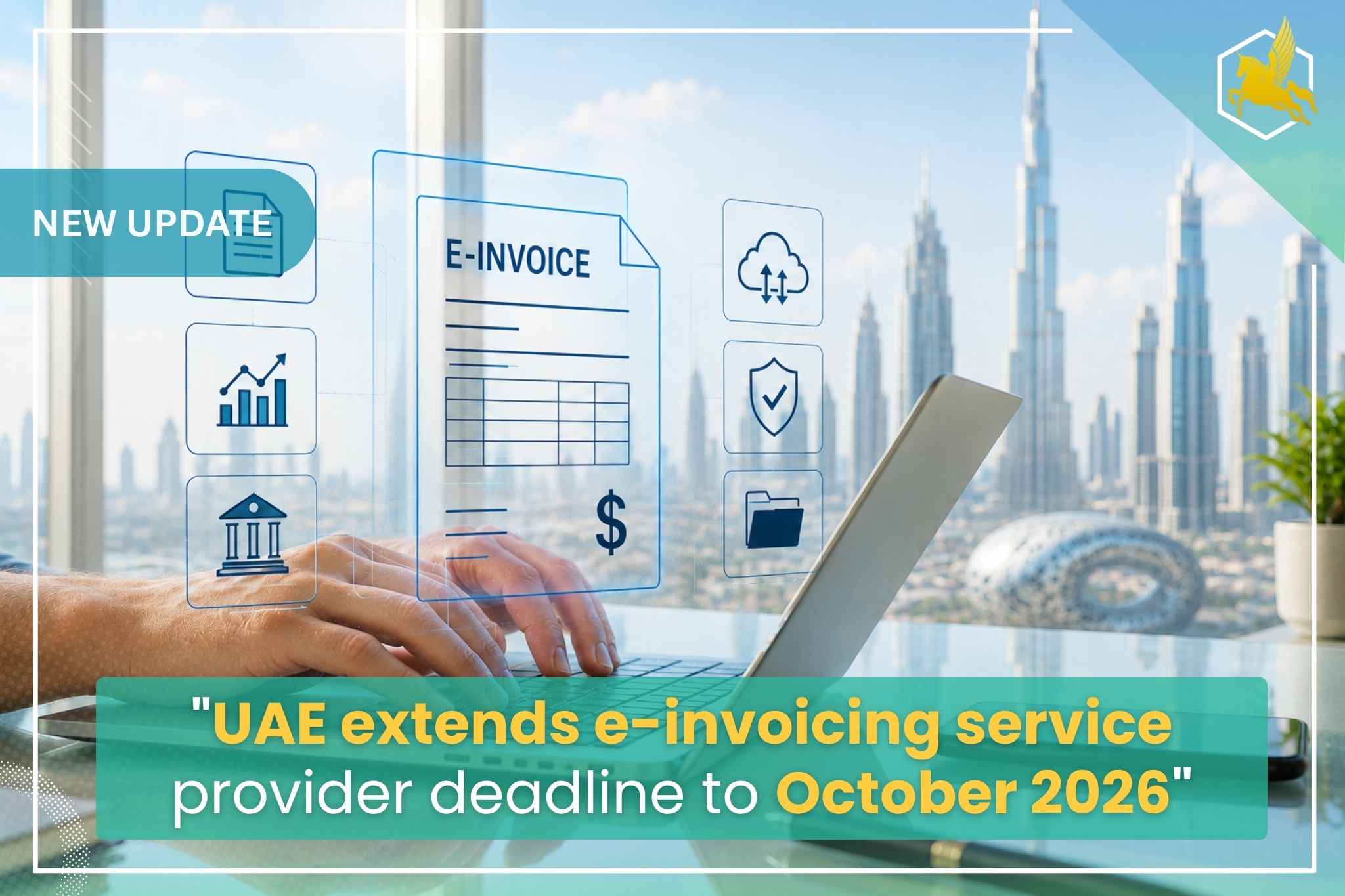
The UAE Ministry of Finance has announced a targeted but important update to the country’s e-invoicing rollout plan. The UAE e-invoicing deadline for appointing an Accredited Service Provider (ASP) has been officially pushed from July 31, 2026, to October 30, 2026 — giving businesses with annual revenues above Dh50 million an additional three months to select and onboard a compliant service provider.
This extension comes in direct response to feedback from the business sector, which raised concerns about limited technical options and pricing competitiveness among ASPs. While the adjustment offers welcome breathing room for compliance teams, it does not change the bigger picture: full e-invoicing implementation is still mandatory by January 1, 2027. If your business crosses the Dh50 million revenue threshold, the clock is still ticking.
What Is the UAE E-Invoicing Mandate?
The UAE’s mandatory e-invoicing system requires businesses with annual revenues above Dh50 million to submit invoices digitally through an Accredited Service Provider (ASP), as part of the country’s wider digital tax transformation.
This system is built on a structured, phased rollout governed by the Ministry of Finance. Rather than businesses exchanging invoices directly, all e-invoices must pass through an MoF-accredited technology provider that validates and transmits the invoice data in compliance with UAE standards. The system is designed to improve tax compliance visibility, reduce fraud, and bring the UAE in line with global best practices in digital tax infrastructure.
The mandate applies specifically to entities registered for VAT in the UAE whose annual revenues exceed Dh50 million — a threshold that captures a significant portion of the country’s commercial and corporate sector.
What Changed — The New October 2026 Deadline Explained
Under an amendment to Ministerial Decision No. 244 of 2025, the UAE e-invoicing deadline for appointing an ASP has been moved from July 31, 2026, to October 30, 2026.
Here is what the change means in practice:
- Eligible businesses now have until October 30, 2026 to formally appoint an Accredited Service Provider.
- The pilot phase of the e-invoicing system will still begin on July 1, 2026, with early adopters and approved providers participating.
- The mandatory full implementation deadline of January 1, 2027, for businesses above Dh50 million in annual revenue, is not affected by this extension.
In short: you have more time to choose your ASP, but you do not have more time to go live. The implementation runway between October 30 and January 1 is a tight 63 days — which means businesses that delay until the last moment will face a compressed onboarding and integration window.
Why Did the UAE Extend the E-Invoicing ASP Deadline?
The Ministry of Finance cited two primary reasons for the extension following a comprehensive review of market readiness:
- Business sector feedback on pricing and options The business community raised concerns about limited choice among accredited providers and the need for more competitive pricing. A broader, more competitive ASP market benefits end users — especially SMEs just crossing the Dh50 million threshold — by driving down integration costs and improving service quality.
- Growing but still-maturing ecosystem As of the announcement, 32 service providers have been approved, with several more in the final stages of accreditation. Allowing additional time for that pipeline to complete means businesses will have a fuller range of technical and commercial options when they make their selection.
The Ministry’s position is clear: this is a market-driven refinement, not a signal of broader delays to the programme.
What Is a White-Label Mechanism and Why Does It Matter?
Dubai offers several well-known free zones that cater to different industries:
Alongside the deadline extension, the Ministry also introduced amendments to Ministerial Decision No. 64 of 2025, establishing a white-label mechanism that allows UAE-registered companies to partner with international technology providers.
Under this framework, a local UAE firm can license and deliver e-invoicing technology developed by an international provider, under its own brand and service wrapper. This model serves several strategic goals:
- Knowledge transfer: International expertise flows into the local market through structured partnerships.
- Local capability building: UAE firms develop technical depth in e-invoicing and broader digital tax infrastructure.
- Market alignment: Services are tailored to UAE regulatory requirements, ensuring compliance without sacrificing innovation.
- Competition: More providers in the market — including white-label entrants — increase choice and drive down costs for end businesses.
For businesses evaluating ASP options, this means the provider landscape will grow meaningfully in the months ahead. A white-label ASP backed by proven international technology may offer a strong combination of local support and enterprise-grade capability.
What UAE Businesses Must Do Before October 2026
Whether you're already mid-compliance or just getting started, here is your action checklist:
- Confirm your revenue eligibility. If your annual revenue exceeds Dh50 million, the mandate applies to you for the January 1, 2027, implementation date.
- Audit your current invoicing infrastructure. Identify whether your ERP, accounting system, or billing platform is capable of integrating with an ASP — and what technical gaps need to be addressed before go-live.
- Evaluate accredited service providers. Review the Ministry of Finance’s approved ASP list. With 32 providers already accredited and more incoming, compare offerings on integration capability, pricing, support, and track record.
- Consider the white-label market. As newly approved white-label providers enter the market, revisit your shortlist closer to October to ensure you are choosing from the most competitive options available.
- Assign an internal compliance lead. E-invoicing implementation requires coordination across finance, IT, and operations. Designate ownership now to avoid a chaotic Q4 scramble.
- Plan for integration and testing time. Once you appoint an ASP by October 30, you have roughly 60 days to integrate, test, and go live before January 1, 2027. Factor this into your project timeline today.
- Stay updated on MoF guidance. The Ministry has signalled ongoing engagement with the business community. Monitor official MoF communications for further amendments or clarifications before the October deadline.
Key Dates at a Glance
Milestone | Date |
E-invoicing pilot phase begins | July 1, 2026 |
Deadline to appoint an ASP (extended) | October 30, 2026 |
Mandatory full implementation (Dh50M+ revenue) | January 1, 2027 |
Amendment reference (ASP deadline) | Ministerial Decision No. 244 of 2025 |
Amendment reference (white-label mechanism) | Ministerial Decision No. 64 of 2025 |
Conclusion
The extended UAE e-invoicing deadline to October 30, 2026, is a practical adjustment — not a pause. The Ministry of Finance has been clear: full implementation for businesses above Dh50 million in annual revenue is still required by January 1, 2027, and that date will not move. Use the additional time wisely — evaluate providers, audit your systems, and assign compliance ownership now so your business is ready well before the hard deadline arrives.
Sources: UAE Ministry of Finance — Ministerial Decision No. 244 of 2025 (amended); Ministerial Decision No. 64 of 2025 (amended). Published May 2026.
Reach out to Unicorn Global Solutions L.L.C for a Free Consultation
Frequently Asked Questions (FAQs)
The Dubai e-invoicing deadline for appointing an Accredited Service Provider (ASP) has been extended to October 30, 2026. This applies to businesses with annual revenues exceeding Dh50 million, under the amendment to Ministerial Decision No. 244 of 2025.
No. The mandatory full implementation deadline remains January 1, 2027. Only the deadline to appoint an ASP has been extended. Businesses must be fully live on the e-invoicing system by the start of 2027.
The mandate currently applies to UAE entities with annual revenues exceeding Dh50 million. These businesses are required to appoint an Accredited Service Provider and fully implement the e-invoicing system by January 1, 2027.
The Ministry of Finance extended the deadline following a comprehensive market readiness review and feedback from the business sector. The business community requested broader technical choices and more competitive pricing among ASPs. The extension allows more providers to complete accreditation and gives businesses more options.
Accredited Service Provider is a technology company approved by the UAE Ministry of Finance to validate, process, and transmit electronic invoices in compliance with UAE e-invoicing standards. Businesses covered by the mandate must route all invoices through an ASP rather than exchanging them directly.
The white-label mechanism, introduced through an amendment to Ministerial Decision No. 64 of 2025, allows UAE-registered companies to partner with international technology providers and deliver e-invoicing services under their own brand. It is designed to build local technical capacity, enable knowledge transfer from global providers, and expand the pool of competitive ASPs in the UAE market.
As of the Ministry of Finance's announcement, 32 service providers have been fully approved, with several additional providers in the final stages of the accreditation process.
Businesses should begin evaluating accredited providers immediately by reviewing the MoF's approved ASP list, assessing integration compatibility with their existing systems, and requesting commercial proposals. Given that full implementation is required by January 1, 2027, waiting until October 30 to appoint a provider leaves only 60 days for integration, testing, and go-live.
NOTE:
The above note is subject to further study and clarification. It does not constitute a formal opinion from our end. Before making any decisions based on the above, we recommend consulting our experts on the subject.